In praise of Mario Rutelli
The renovation of Old College is coming along at a pace. Scaffolding is being slowly taken away to reveal our dear old beauty (the figurehead of the university), bought by Thomas Savin and designed by J.P. Seddon in 1864 as a fabulous get away for holiday makers, adapted and built to coincide with the railway arriving in Aberystwyth. Bought by the University when Savin went bankrupt and renovated and re-purposed for education.
Soon we will be able to appreciate the old lady again (Hen Coleg) in her new fine clothes, the renovation respects the past but has incorporated a twist of the new. it’s going to be very exciting. The attention to the restoration by Andrew Scott Ltd has been impressive; new carvings, replacement leading and roofing to keep but complement the sensitivities of the original build. Once the restoration is complete, this will mean that the sculptures will be revealed for us to appreciate the building once again.
My ‘Past Presences’ walk highlights the influence that Roman and Greek sculpture have on present day public sculptures. We discuss the rise and fall of placing noble or significant figures on top of plinths and the radical event that happened to the Colson statue in Bristol. My walk embraces lots of debate as well as giving you a background of an understanding of the casting techniques used by sculptors.
Last summer I visited Sicily and Palermo for a mosaic break. This was the home of the Professor of Sculpture, Mario Rutelli and his family.
Our war memorial at Aberystwyth sculpted by Rutelli, shows Chastity and Humanity at Castle Point, built in 1923 at a cost of £3,600. It shares the same style of sculpting as pieces in Sicily and allows you to view the piece from all sides.
I was always curious about why Rutelli has five large pieces in Aberystwyth and why our war memorial sported a nude; odd for a non-conformist society don’t you think? Nikolaus Pevsner also states this as an unusual piece but does not really elaborate further. Mario Rutelli fled Rome; he was deeply offended by the government took action to cover up his masterpiece; (one of his fountains in Rome) the Fountain of the Naiads. This depicts water nymphs, made in 1888. It is located in the Piazza della Republica; it was boarded up, so not to offend children and nuns. It showed the nymphs of water, river, oceans, and lakes holding swans and dragons. The women are depicted lunging forward provocatively; so similar to our war memorial.
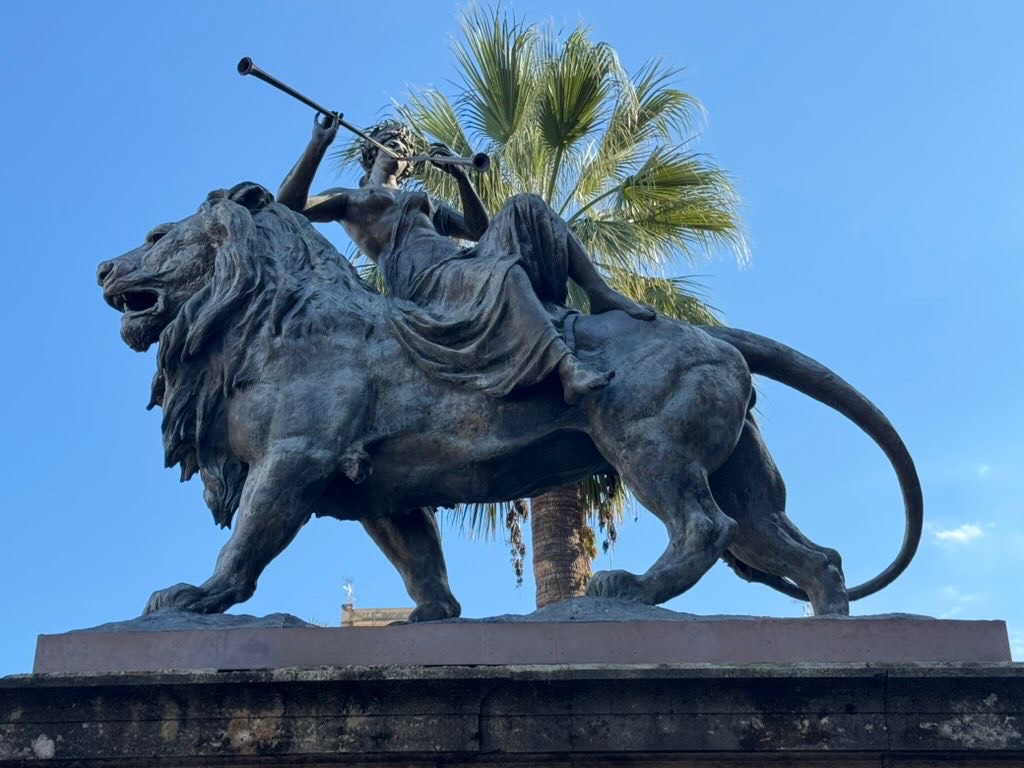
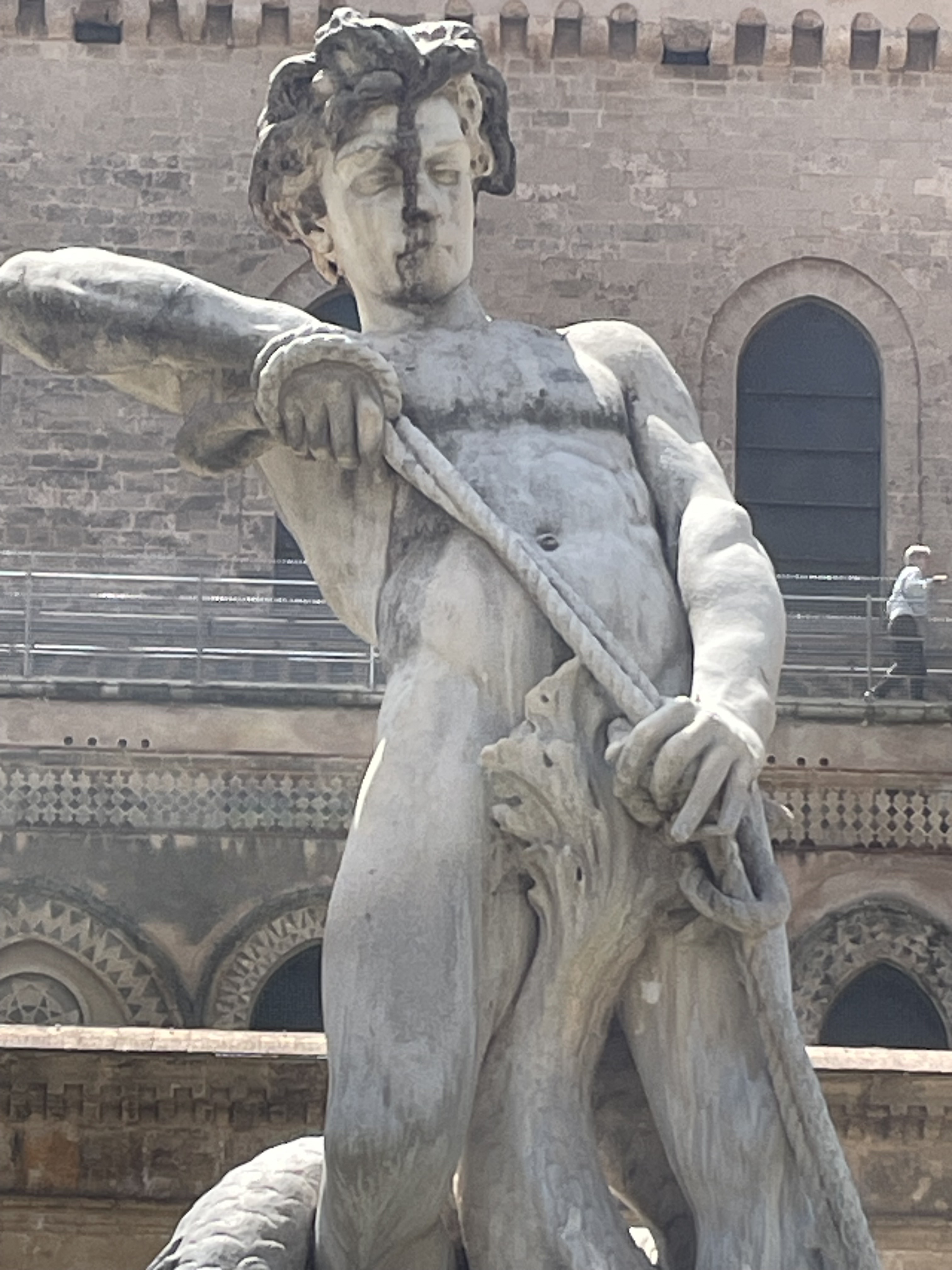
Whilst on my mosaic break in nearby town of Monreale, Sicily, I stumbled upon a visually striking serpentine style fountain sculpture in the square outside the magnificent cathedral. I had visited the cathedral to see the bejewelled gold 12th century smalti mosaics; a feast for the eyes, I highly recommend by the way.
The large figure stands central in the busy square; ‘wow that looks familiar’. and down at the base was the signature, Mario Rutelli!
A good piece of sculpture allows you to circumnavigate it and appreciate it from all angles- we describe this as ‘working in the round’. What a chance find, I thought as I had my first gelato.
The other piece in Aberystwyth (Prince of Wales) by Rutelli does not welcome you to view in it the round, and is slightly out of kilter to his usual style. This contentious plinth statue of the Prince of Wales, dressed in Chancellor’s robes, resting his mortar board under his arm, has quite a history – all is revealed during my walk. Famed as the only life-size depiction of the Prince of Wales; it does not really capture his likeness and remains a sensitive subject for the University due to Edward’s links as a Nazi sympathiser. What do you do with a statue that doesn’t really fit with the institution’s ethos? This all gets discussed on my walk.
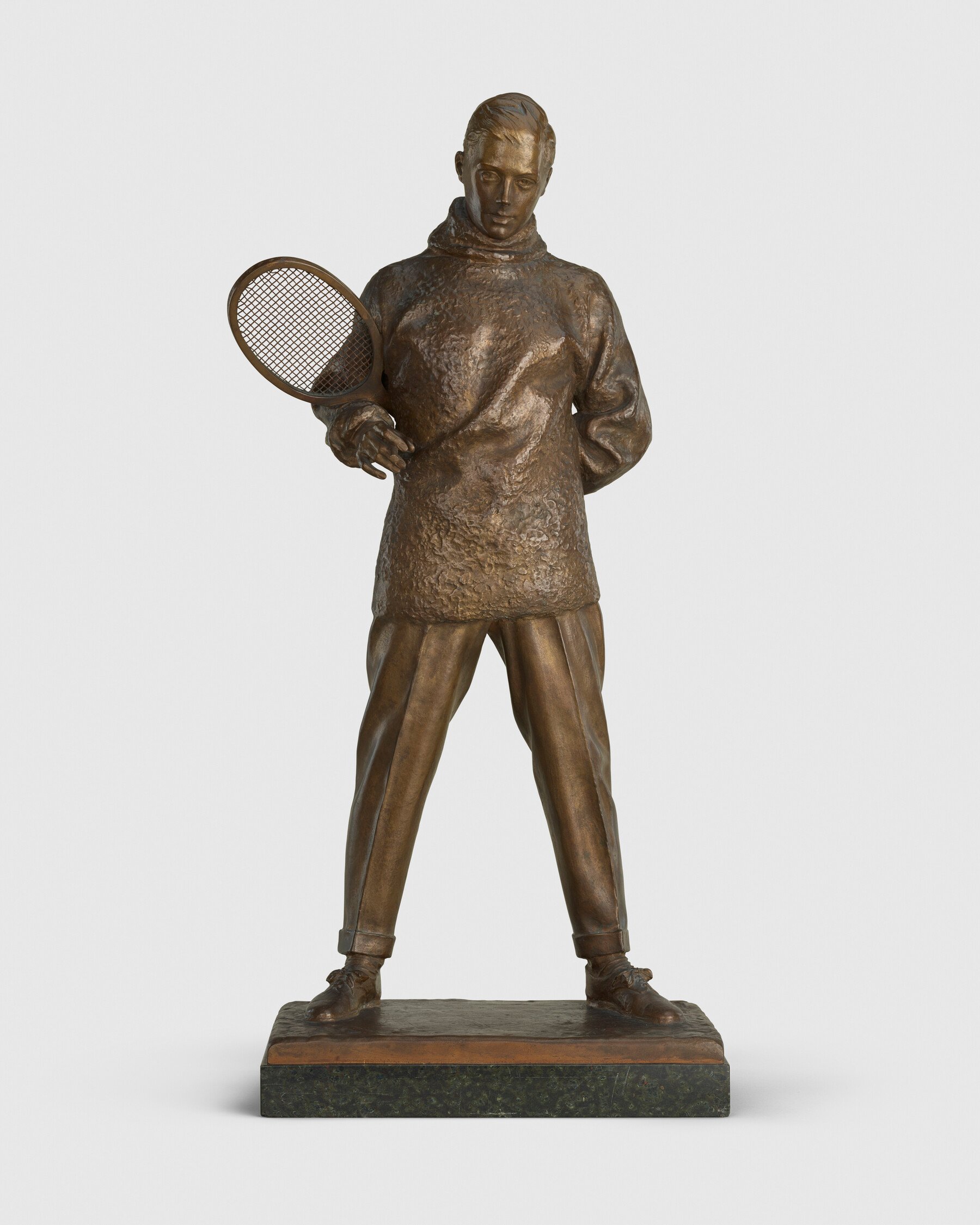
Of course, I am biased; a better lifelike and more dapper statuette of the Prince of Wales was sculpted by my relative (Charles Sergeant Jagger) in bronze commissioned by Lord Esher and sold by the family at auction in 2007. Charles Sergeant Jagger ARA. 1921 was one of the founders of the New Sculpture Movement. His piece depicts the Prince of Wales in his tennis gear, holding a cigarette. This is pleasing to view in the round; his tennis racket behind his back. This is currently housed in Sheffield archives.
If you are touring Sicily, I can highly recommend a Rutelli tour, you will see replicas of Chastity in parks and very similar pieces to our local sculptures in the small towns of Sicily where he and his family lived.
Archive stories tell of Rutelli using a local lady as a model but finding these other sculptures in different locations, demonstrates that these stories cannot be substantiated, possibly a head may have been sculpted from a local likeness, but the works were undertaken in Italy.
A longer article will be released when the statues are revealed. Who knows, our plinthed Prince may have a new location by then, in a less prominent place perhaps?


Leave a comment